
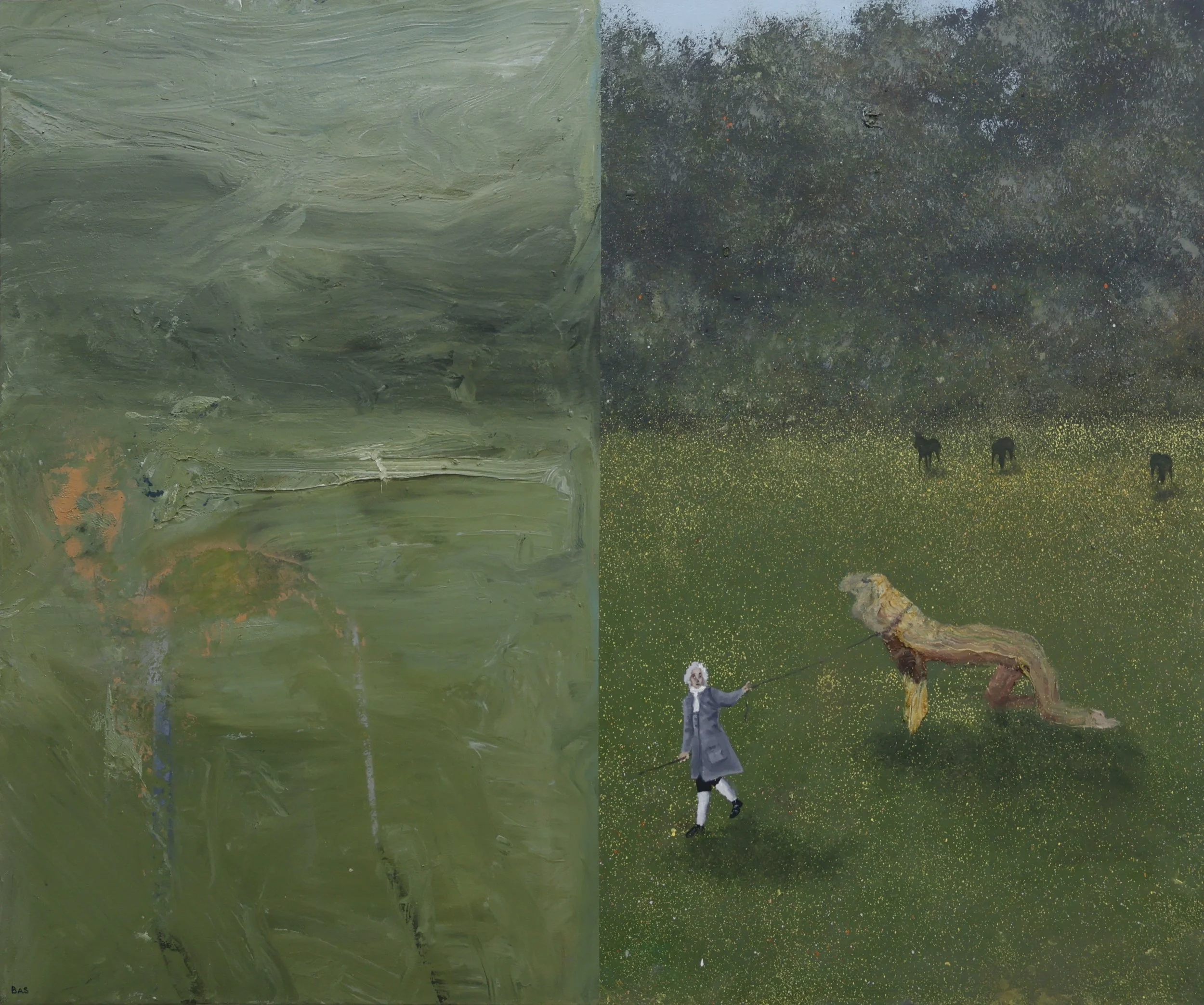
Bastiaan van Stenis (b. 1981) is a mid-career South African artist, known primarily as a painter who also works in sculpture, installation, and assemblage. His ‘composite works’ incorporate found material, detritus from nature, and taxidermy (using animals that have died of natural causes). Bastiaan is largely self-taught, having developed his practice over years of application, experimentation, and research. In a literal sense, Bastiaan is an “outlier/outsider artist.” He lives and works in relative rural isolation. The artist’s attention to the connection between all living things and deep engagement with the natural world are integral to his practice.
These ideas materialize in abstracted or primordial landscapes, devoid of humans. Bastiaan instinctively balances this figuration and abstraction, merging innovative painterly techniques and styles with a nuanced deference to art-historical touchstones. Incorporating elements of surrealism, expressionism, neo-romanticism, and, most significantly, the ultra-contemporary genre of “para-pastoralism.” Bastiaan has been probing these concerns for many years, long before the current curatorial trends.
Over the course of two decades, the work of South African artist Bastiaan van Stenis has continued to evolve and captivate while retaining a great sense of urgency. What has emerged over this time is not simply the development of a visual language, but the impression of a practice that remains fundamentally connected to the artist’s life as it unfolds.
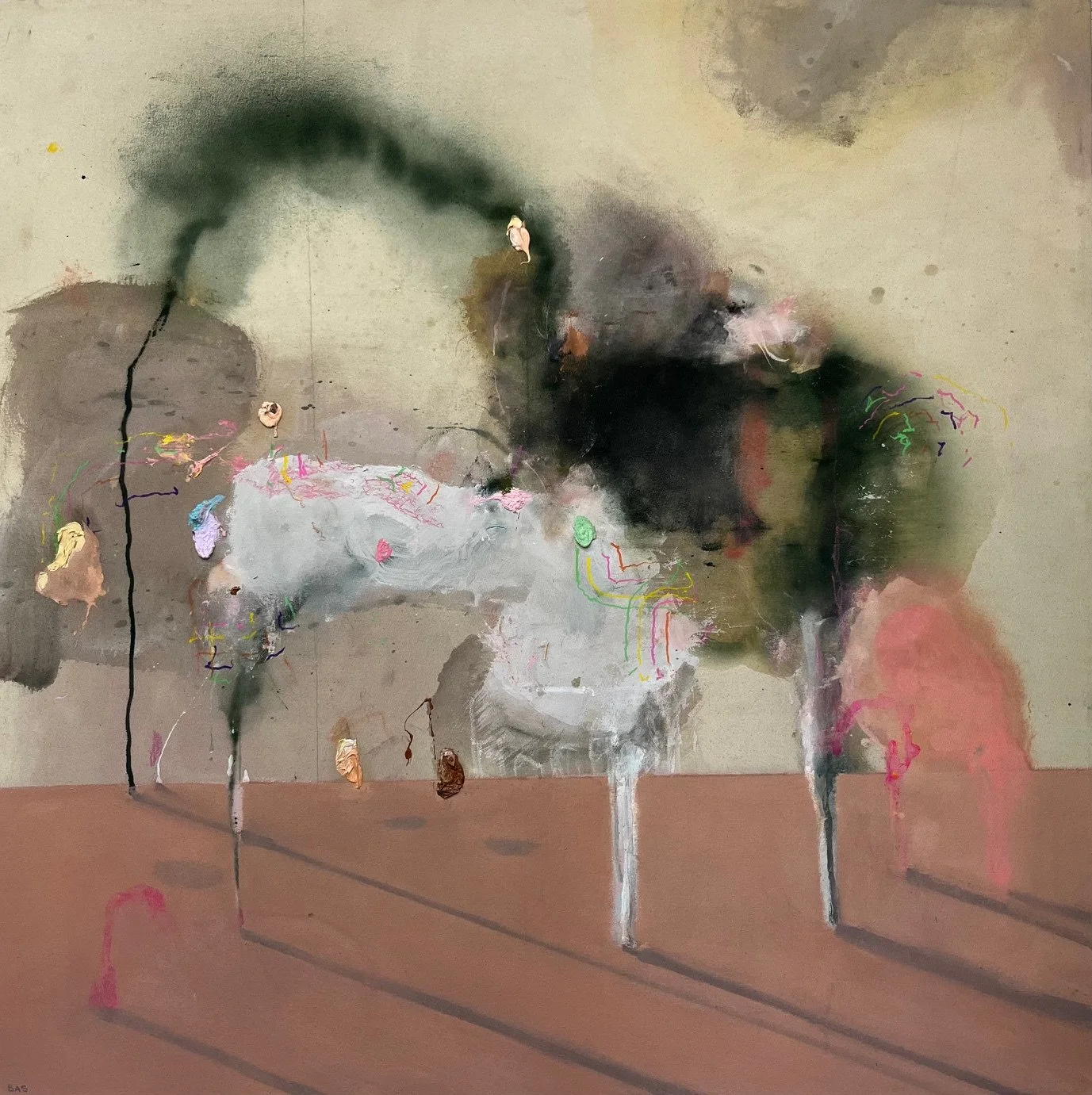
Swooping arcs, elongated shadows, clusters of colour and their surrounding fields: at its core, the work remains a form of landscape. Familiar elements appear and reappear, yet never settle into fixed motifs. Instead, they operate as points of orientation within a broader exploration of space, memory, and sensation.
There is an enduring temptation to frame such work through the language of art history, to situate it within traditions of abstraction, landscape painting, or gestural mark-making. Yet what distinguishes van Stenis’s paintings is their resistance to over-explanation. Before theory, there is paint. The physicality of the medium remains central. Surface, texture, movement, and colour are not illustrations of ideas but active forces within the work itself.
In an era increasingly sceptical of the grand narratives that once surrounded abstraction and surrealism these paintings feel refreshingly unburdened. The rhetoric associated with twentieth-century abstraction often privileged seriousness over pleasure, intellectual distance over sensory experience. Van Stenis’s new work moves in another direction. It embraces energy, immediacy, and a palpable sense of joy without sacrificing complexity.
The paintings evoke a deeply embodied relationship with space and atmosphere. Their ambience recalls heat rising from the earth, distant horizons shimmering in the afternoon light, or the sensation of moving from a cooled interior into open air. Such associations emerge not through direct representation but through the paintings’ capacity to register experience at a sensory level.
Their strength lies in their ability to communicate through visual means first. They suggest that meaning can emerge through attention rather than explanation, through the experience of looking rather than the process of decoding.
A distinct generational sensibility runs through the work. Echoes of a 1990s visual landscape surface throughout: fading public swimming pools, caravan parks, the aesthetics of grunge, experimental music cultures, and the saturated, fragmented imagery associated with analogue noise and early digital visual culture. These references remain ambiguous rather than literal, contributing to a mood that feels simultaneously familiar and elusive.