
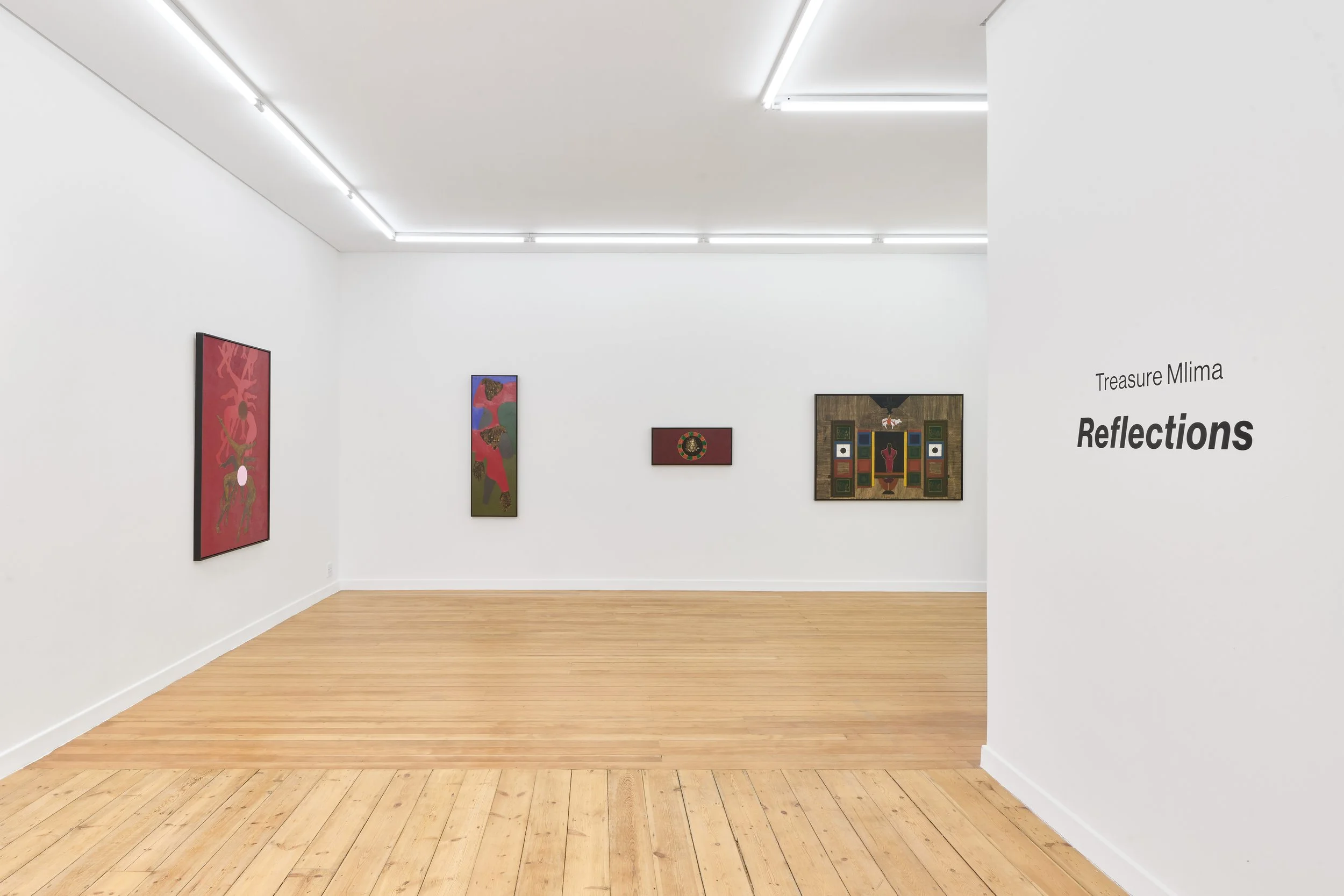
Reflections
Treasure Mlima
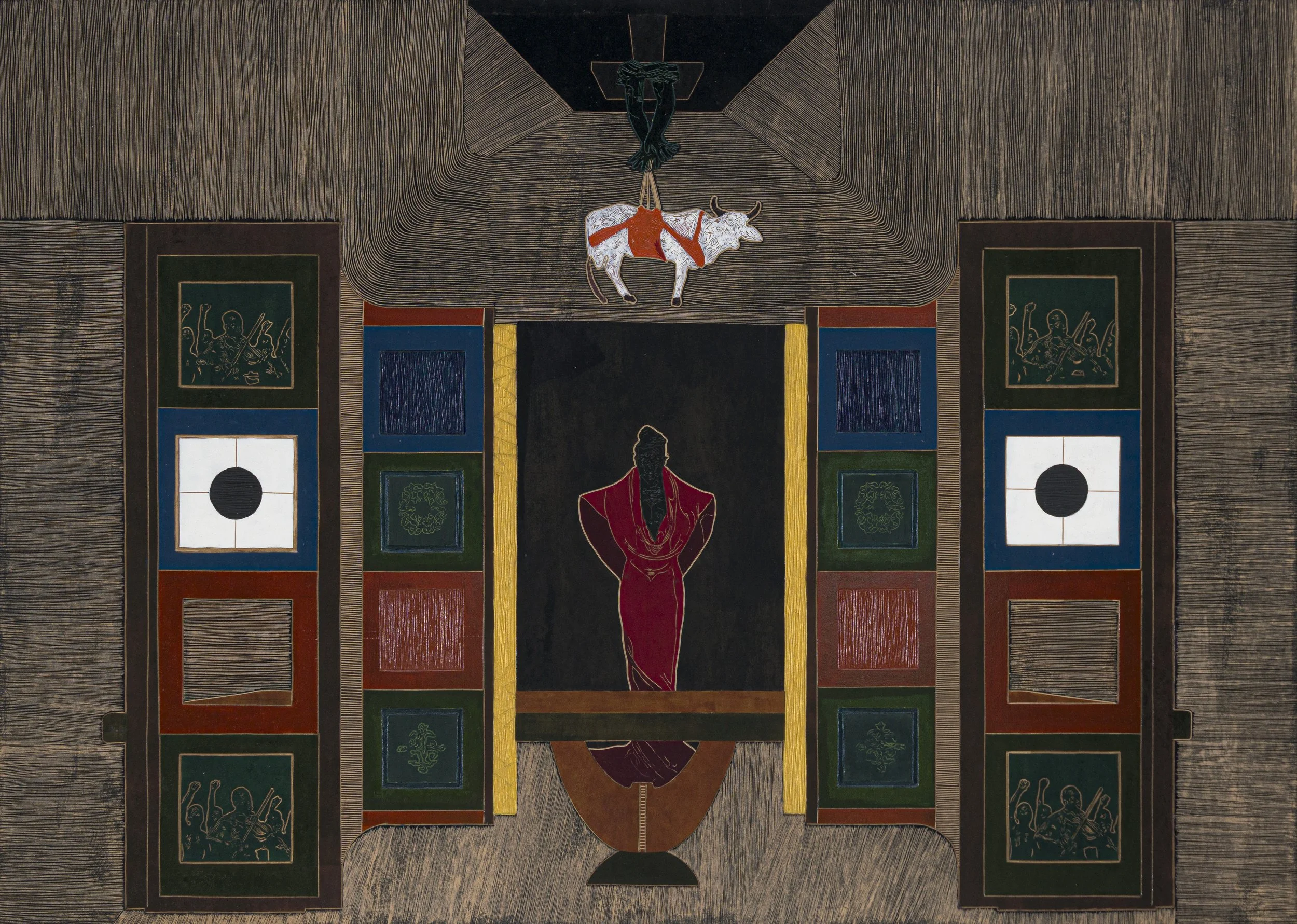
Treasure Mlima’s work examines the corporeal form as a contested site between place and the construction of self. His practice is deeply anchored in the materiality of wood, utilizing the rhythmic act of carving to trace time, identity, and the fluid nature of the contemporary African experience. His subjects occupy a threshold between abstraction and recognition, actively resisting a fixed identity in favour of dynamic states of presence. Mlima frequently references modern archival figures who exist within their own distinct realities, migrating from private realms to translate, interrogate, and elevate the daily complexities of human potential.
The formal language of his work pairs digital composition with intricate hand-carving techniques, reflecting a sharp sensitivity to temporality, materiality, and spatial dynamics. This conscious decision to treat the anatomy as a primary source of knowledge provides an expansive abstract territory to leverage the relationship between physical form and the evolving truth of identity. Mlima positions his work as a bridge between what is known and what remains obscured.
As a cultural practitioner, he is committed to uncovering hidden narratives, balancing neutrality with subversion, and introspection with provocation. Through his art, he does not impose conclusions but rather suggests alternative realities, allowing space for continuous interpretation and dialogue.
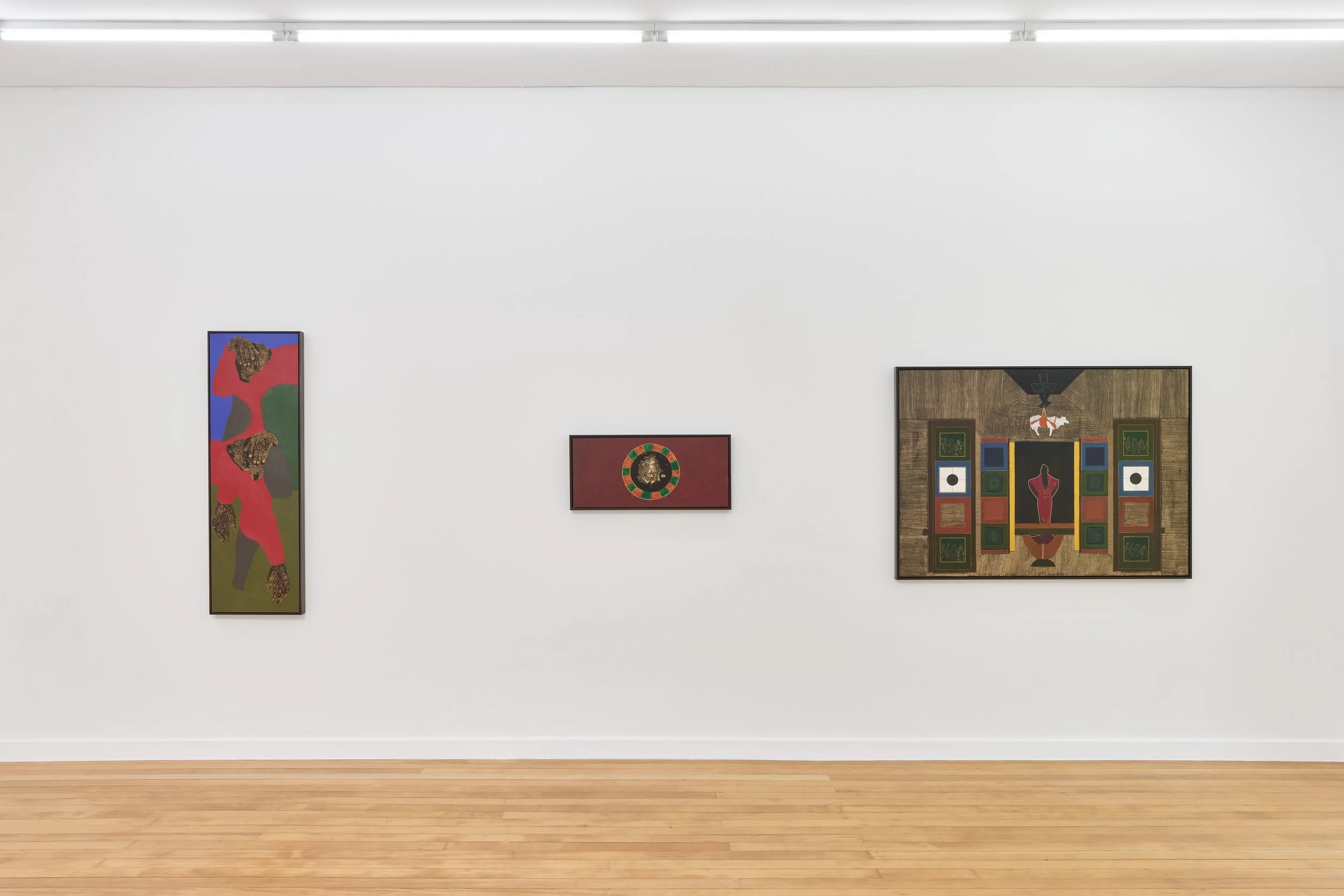
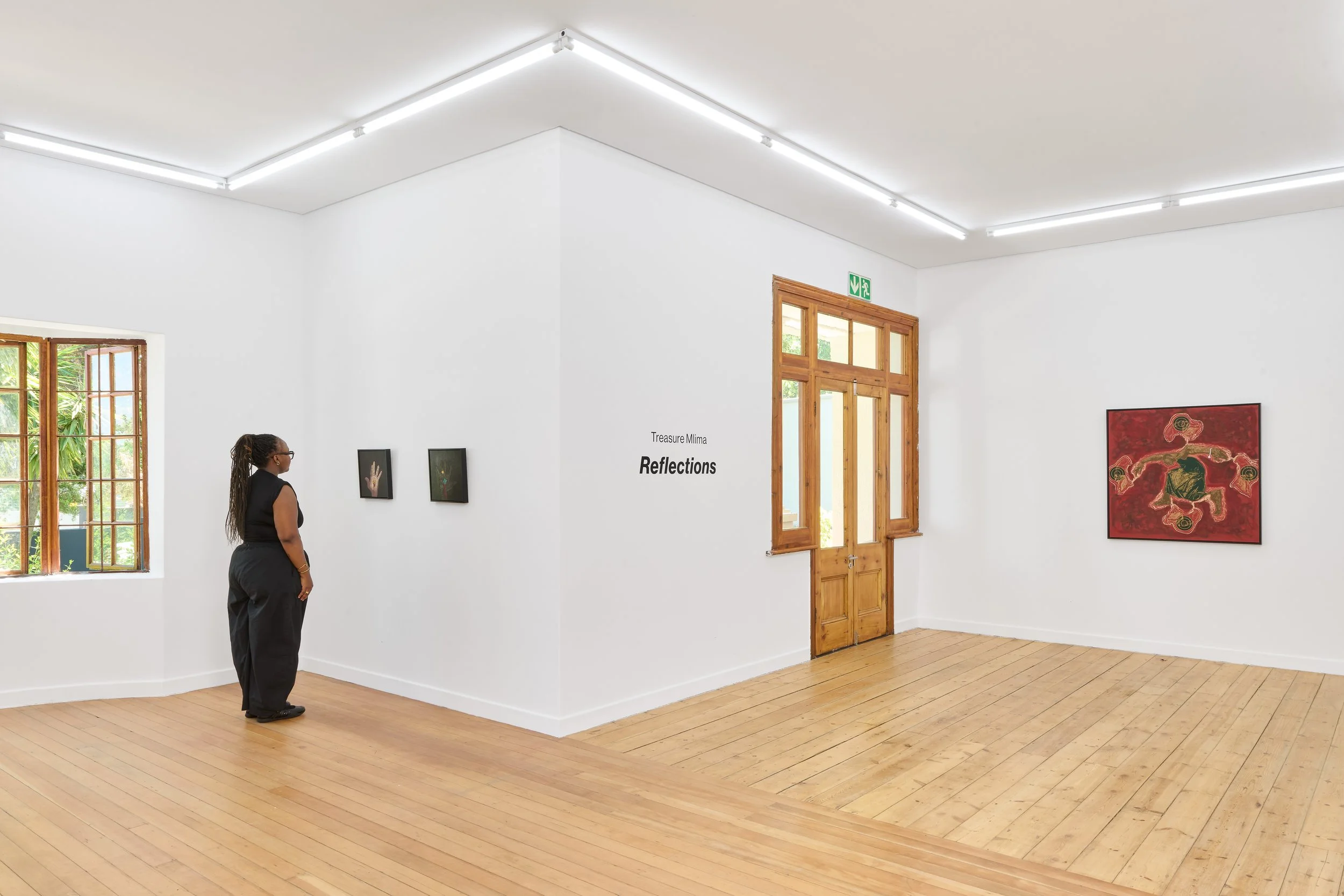
In this exhibition, Treasure Mlima investigates consciousness not as a static ideology, but as a visceral, embodied experience.
The exhibition isolates those quiet, fracturing moments where the body questions performance, capturing the invisible contours of strain carved into the self. Influenced by personal history and the weight of colonial structures, alongside colonial ways of knowing and being, the work draws deeply from Frantz Fanon’s interrogation of psychological displacement, specifically the internalization of the white mask. Mlima explores how these systemic fractures warp the architecture of the self, shaping our behaviour, our perceptions, and the fragile metrics by which we measure self-worth and how we occupy space.
The project centres on a singular, radical ambition: What does it take to name the world and the feeling of belonging? Mlima navigates the tension between presence and performance, seeking a state of being that exists without the exhaustion of a spectacle. Through the methodical, rhythmic labour of carving, he develops a singular formal language, one that prioritizes the slow beauty of emergence over the finality of resolution, and the vitality of improvisation over the rigidity of the perfectly packaged being.
This project interrogates social/cultural systems through the medium of the anatomy . By creating forms derived from human movement. Mlima exposes the internalized pressure to perform competence within spaces whilst questioning where we stand as humanity. Moving beyond mere illustration, the work utilizes material exploration to push the boundaries of how the body is instrumentalized. Reflecting on a career that has long positioned the body as a site of study, Mlima acknowledges a pivotal shift in his practice: he no longer seeks to perform the study, but to present the body as evidence – a physical record of internalized performance and institutional conditioning.
– B.Mputle + T.Mlima