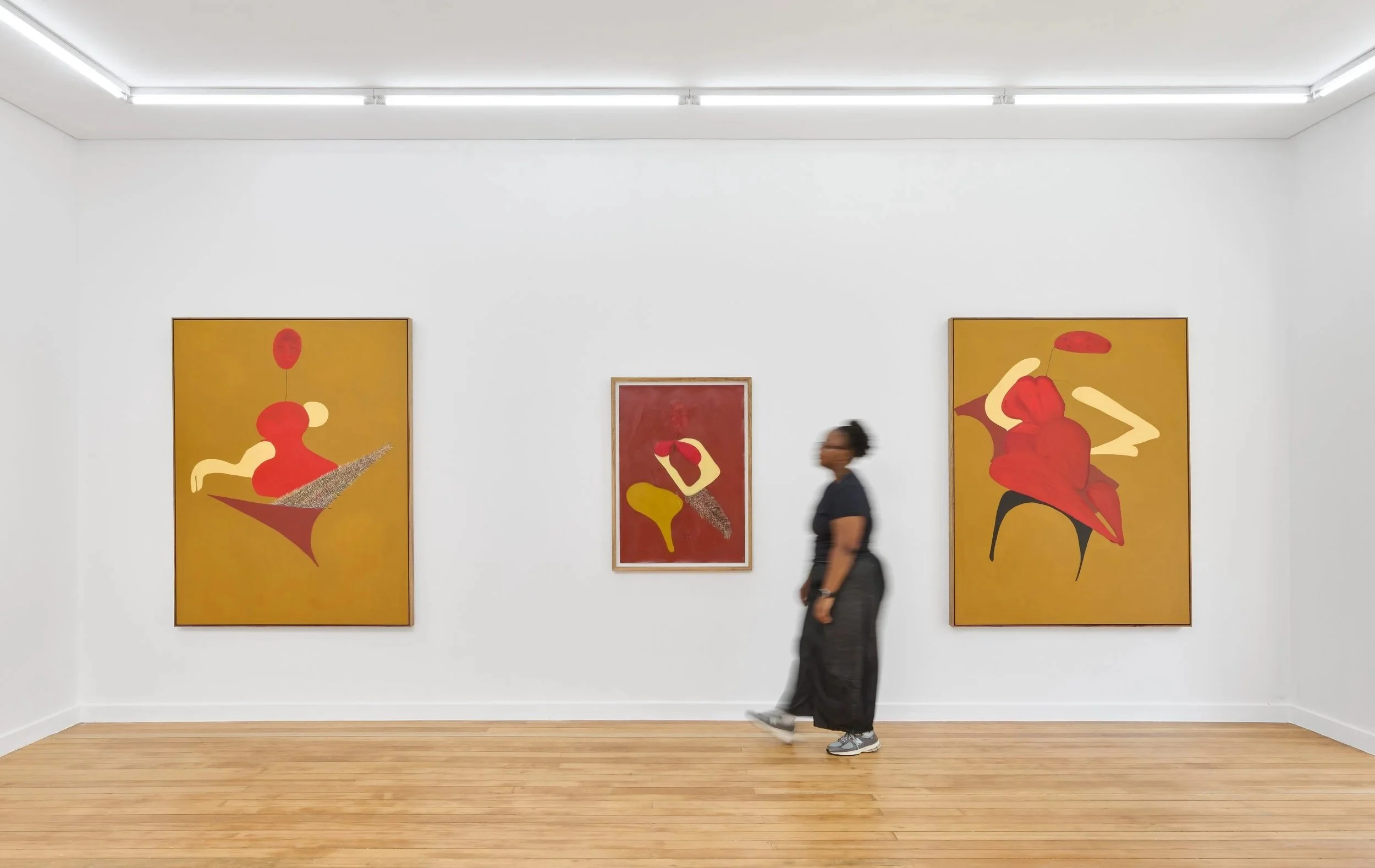
How Her Body Rests – Yolanda Mazwana
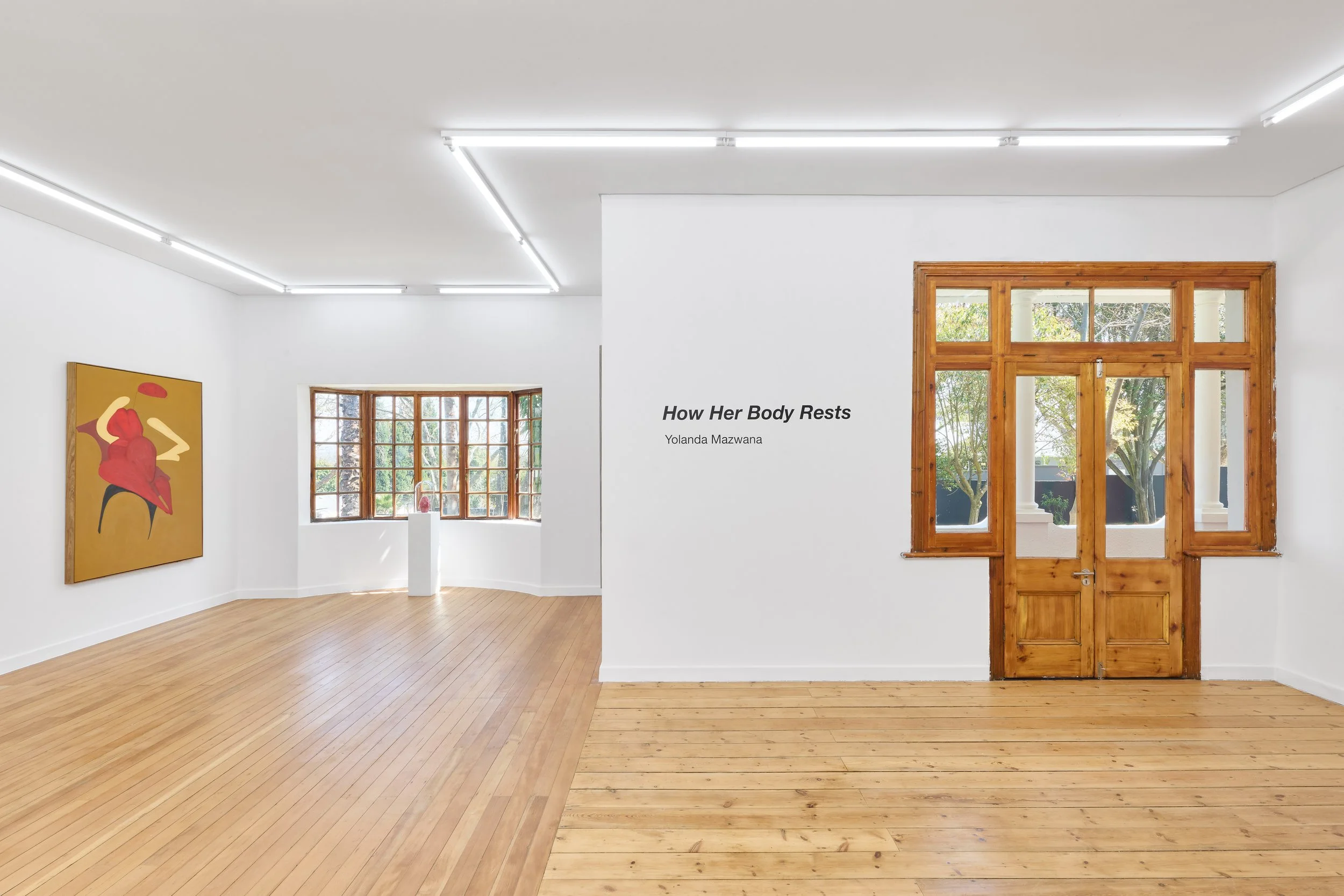
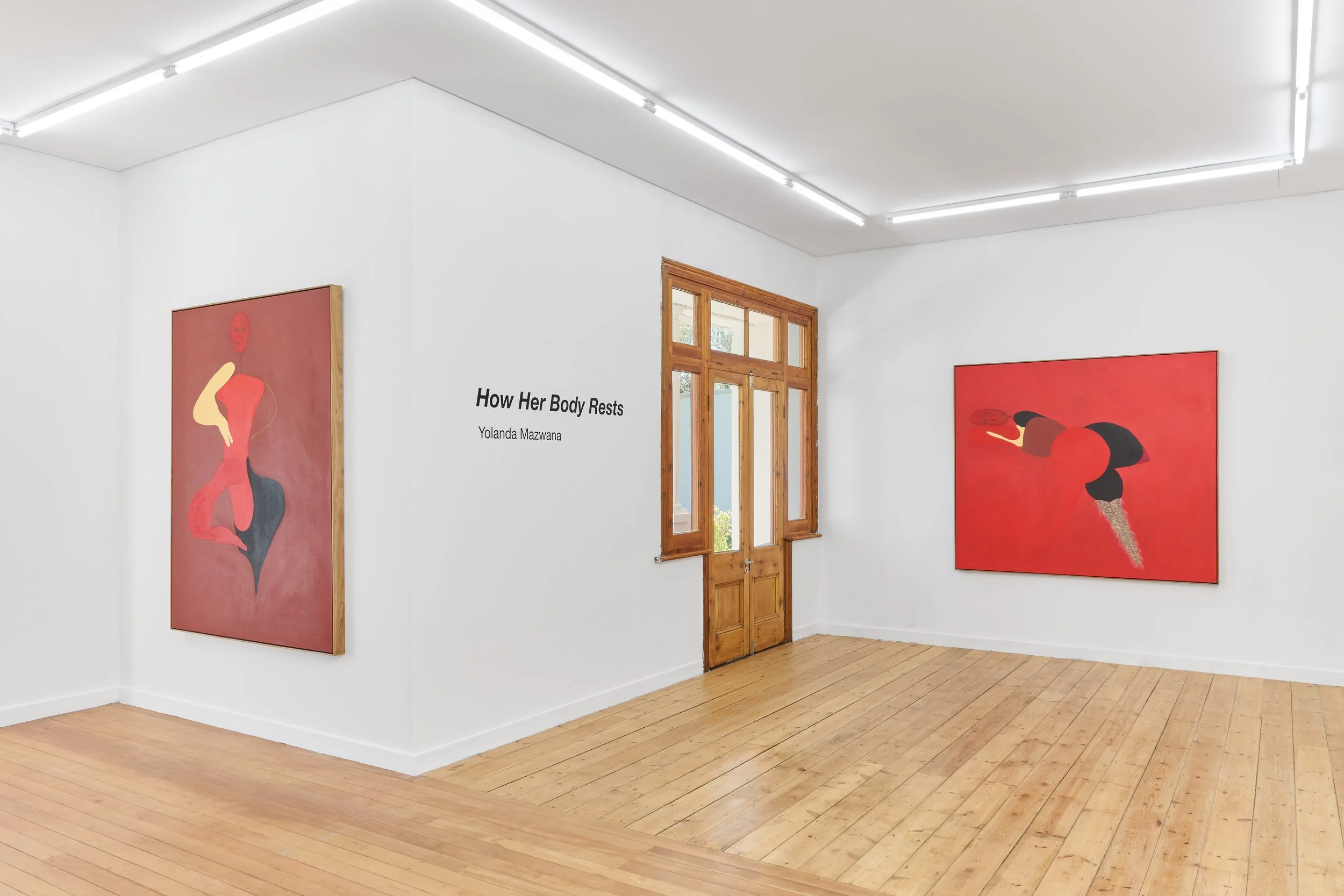
Kumalo | Turpin presents How Her Body Rest by Yolanda Mazwana, for the inaugural gallery solo exhibition. In the work of Yolanda Mazwana, the body is interpreted as form-in-flux, which refuses to be contained within the boundaries of race, gender and anatomy. The intuition-led practice of Mazwana, roots itself in exploring the body - as a site of sickness, trauma, anxiety and, in this latest iteration, rest. For these figures, who contort, envelope and breathe across canvas, Mazwana uses them as conduits through which the emotional and psychological landscape and confrontation with womanhood can be reckoned with. Resisting binary articulations of womanhood and the body, the artist instead encodes a palpable malleability and vulnerability within these changing ‘blobs’. The following text is a dialogical exchange conducted by duo-collective, The Purpose is Discourse, on the subject of Mazwana’s work, working through the themes of rest, neo-expressionist thought and intuitive practice found in How Her Body Rests.
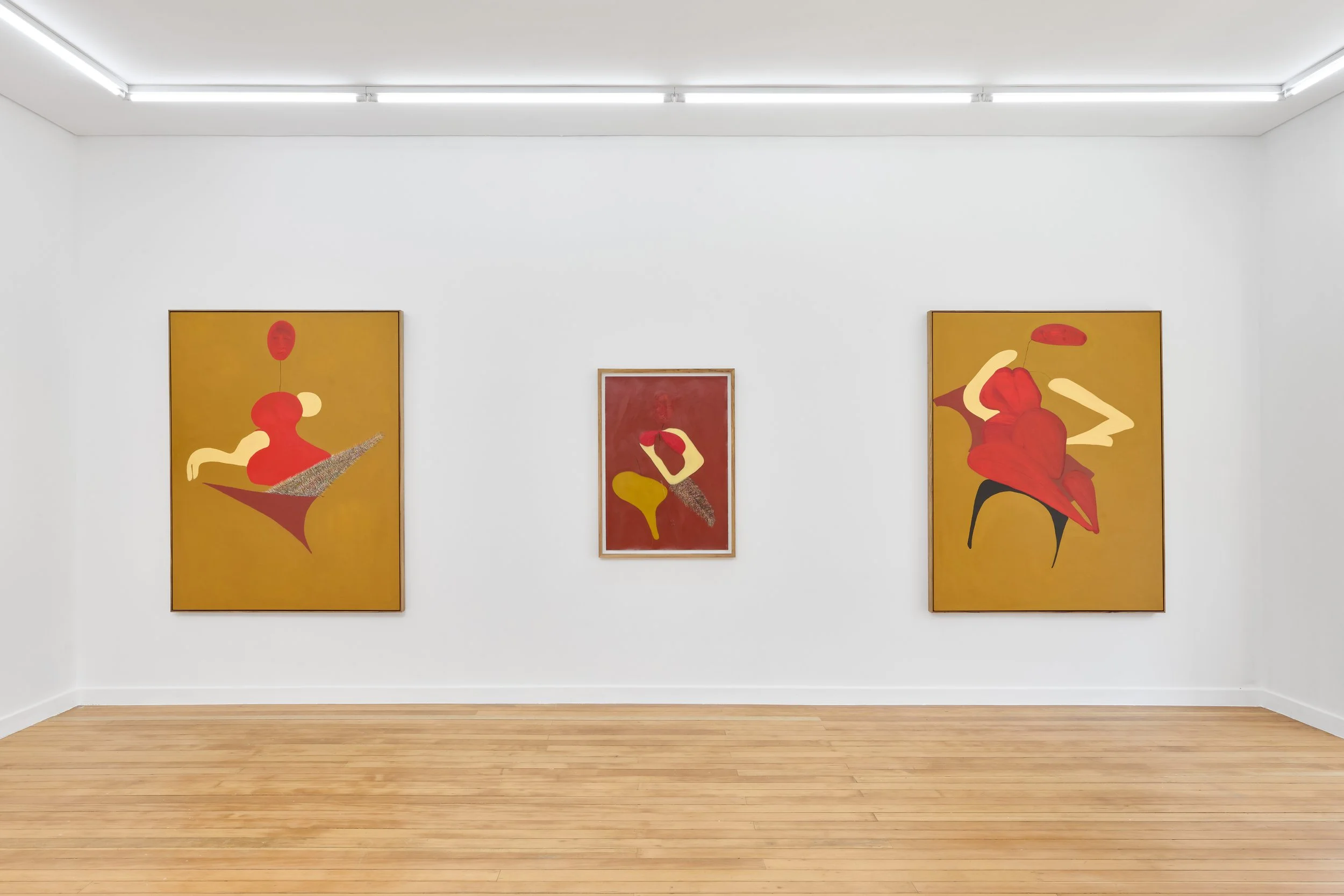
Mosa: The heroines, shapes and bodies coalesced in the landscapes of Yolanda Mazwana float in a haze of endless red, in a place where feeling manifests in the body. They appear unstable, acting as conduits for Mazwana’s ongoing interest in the female body, as something that holds ‘emotional and psychological experience.’ Whereas previous bodies of work reckoned with agoraphobia and bodily trauma, How Her Body Rests continues with the artist’s visual language and negotiates with ongoing tensions around rest.
Aza: At first glance, you could say that Mazwana’s paintings portray her corporeality, related to research conducted by Carol E. Henderson who argues that the body’s ‘narrative prowess [that] stems from the contentious development as an ambiguous social entity’. This interests me because Mazwana’s shift from anguish, previously defined through phobia, now appears to verge on valiance. The exhibition’s title – How Her Body Rests – further suggests an instructional mapping of Mazwana’s journey towards ease, where the body forms its own monuments and pathways. Henderson recognises the black female body as a walking text that is composed of collisions between experiences past and present, as ‘bodily reminders’ of identity, culture, and knowledge.
Mosa: So what can we make of Mazwana’s walking texts? How do we read these vessels through which disembodiment, rest or anxiety unfold within?
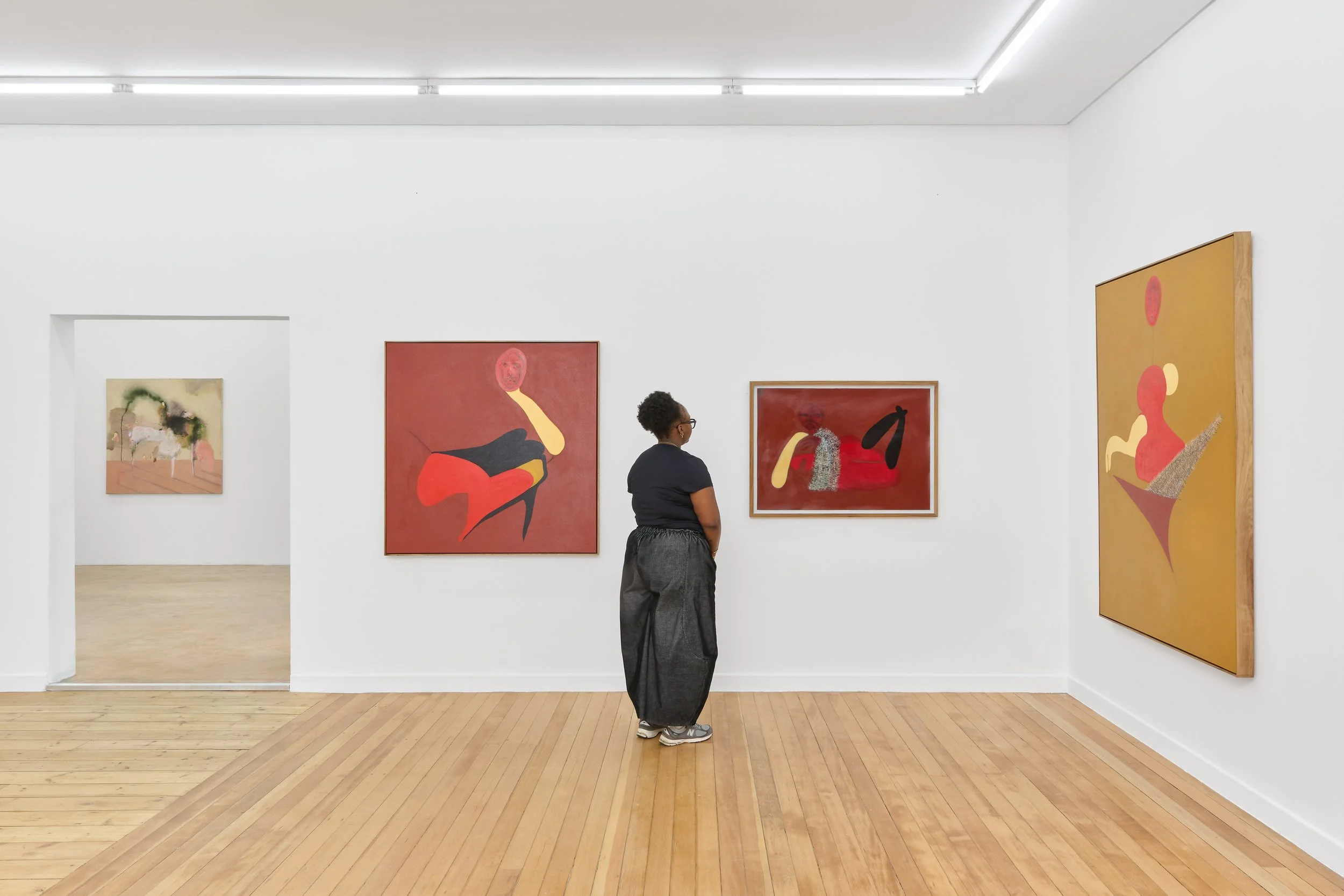
Aza: I contend that the inscriptions Mazwana continues to resolve in her paintings are those representative of her own internal liquidity, which questions how much her body, or vessel, can truly clasp and contain. In this body of work, rest emerges as a point of departure. These figures or blobs, that once found themselves contorted in postures of unease and tension, are now slowly softening and unfurling. Alongside, we see figures that occupy spaces of rest-in-transition as they untether themselves from discomfort and steer towards tranquillity. But perhaps rest is an ongoing state, as journeys are signposted between a beginning and end – which Mazwana refrains from promising in her forms. In this state, the artist’s sustained intention for reposed embodiment establishes rest as essential in preserving bodily histories.
Mosa: Through these prompts and explorations, Mazwana introduces a new vulnerability to the beings that linger within the uncanny. As I look towards the unreadability of the figures’ facial expressions, perhaps a parallel can be drawn with how Mazwana manoeuvres through her own changing understandings of vulnerability and softening – states as unreliable as the figures and forms presented. In her intentional ambiguity, the artist borrows from the canon of Neo-expressionism, which is defined by visceral emphasis on texture, a challenge to form and colour which ultimately contends with modern lived realities. In her subversion of anatomy, Mazwana similarly engages with tools of abstraction to challenge the rigidity of labels like woman or black. Between anxiety and catharsis, the ‘blobs’ live between time and place, but because they are perpetually rooted in feeling, they become mirrors through which the artist sees the body as a vessel of contradiction and complexity.
Aza: It is this state of unreliability that this body of workinterrogates. Is rest something inherited or learnt? Is it a journey or state of being? If Mazwana’s 2024 solo exhibition What Her Body Does assessed the threshold between desire and what the artist recognises to be ‘uncomfortable sensitivity’, then How Her Body Rests responds and examines its collapse: what happens when the body surrenders to feeling and the uncertainty on the pathway towards rest.
Evidently, the exhibition pronounces the condition of rest as one that is not situated in certainty, but one situated in permission. Mazwana permits for the body to remain unresolved and soften without explanation. Her figures continue to drift through fields of feeling without needing to arrive. In How Her Body Rests, rest manifests as an ongoing negotiation with(in) self rather than a fixed state. She asserts that it is ‘not perfect, sometimes awkward, sometimes soft, but something the body keeps coming back to in different ways’.
Text by Aza Lithalethu Mbovane and Mosa Molapo of The Purpose is Discourse, a duo-collective that contemplates art ecosystems and their complexities through discussions, activations and collaboration.